Commercial Access Control Systems in St. Louis

Know who enters your facility, where they go, and when, with the audit trail to prove it.

Physical Keys Leave You With No Record of Who Went Where

If your building still runs on keys or a card reader with no management layer behind it, access decisions are being made without you. These are the three problems facility managers bring to us most often.

Keys Walk Out the Door and Never Come Back

One lost key can mean rekeying an entire wing. Credential-based access control lets you deactivate a single user in seconds and leave every other door untouched.

You Can’t Prove Who Was In the Building

Insurance reviews, HR investigations, and compliance audits all ask the same question: who had access and when. A managed system answers it with a timestamped log instead of a guess.

Every Location Runs on Its Own System

Facilities teams managing three offices or a district with eight buildings end up with three or eight separate systems, separate credential lists, and no single view. Paramount consolidates them onto one platform.

Choose the Right Access Control Model for Your Facility

Not every building carries the same risk profile or management structure. Paramount evaluates your facility, your user base, and your security requirements before recommending a model, because the model determines how much administrative work the system creates for your team every week.

  • Discretionary Access Control (DAC)

    DAC gives individual resource owners control over who can access specific areas. It is flexible but requires consistent management to stay secure, making it a better fit for smaller teams and lower-risk environments.

  • Role-Based Access Control (RBAC)

    RBAC assigns permissions by job role rather than by individual, which simplifies administration and scales as teams grow or change. This is the most common model Paramount deploys for commercial offices, healthcare facilities, and multi-tenant buildings.

  • Mandatory Access Control (MAC)

    MAC applies fixed, policy-driven permissions that users cannot modify. For data centers, government facilities, and regulated industries, Paramount configures MAC systems that enforce access policy without exceptions.

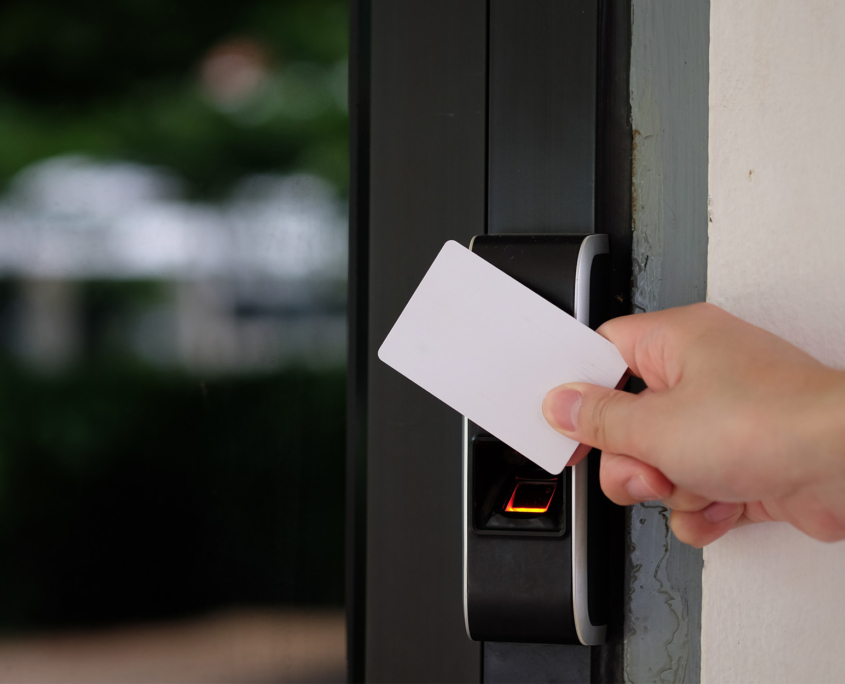
Electronic key access system with hand inserting key card to unlock door

The Platforms, Credentials, and Hardware We Install

Paramount installs and services Lenel, Genetec, and Allegion security hardware. These are the enterprise-grade platforms that large commercial accounts, school districts, and government facilities specify by name, and being certified on them is the reason we can take over an existing system instead of ripping it out and starting over.

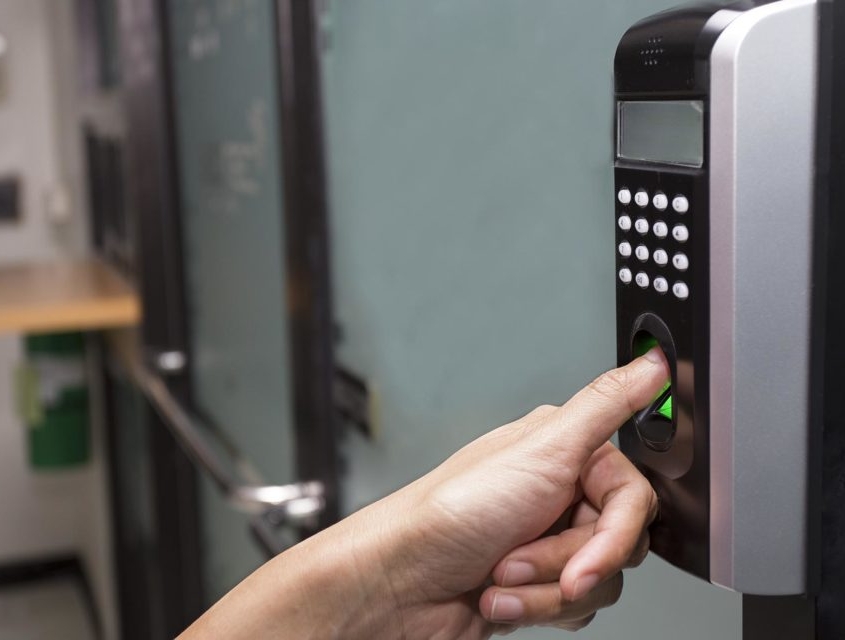
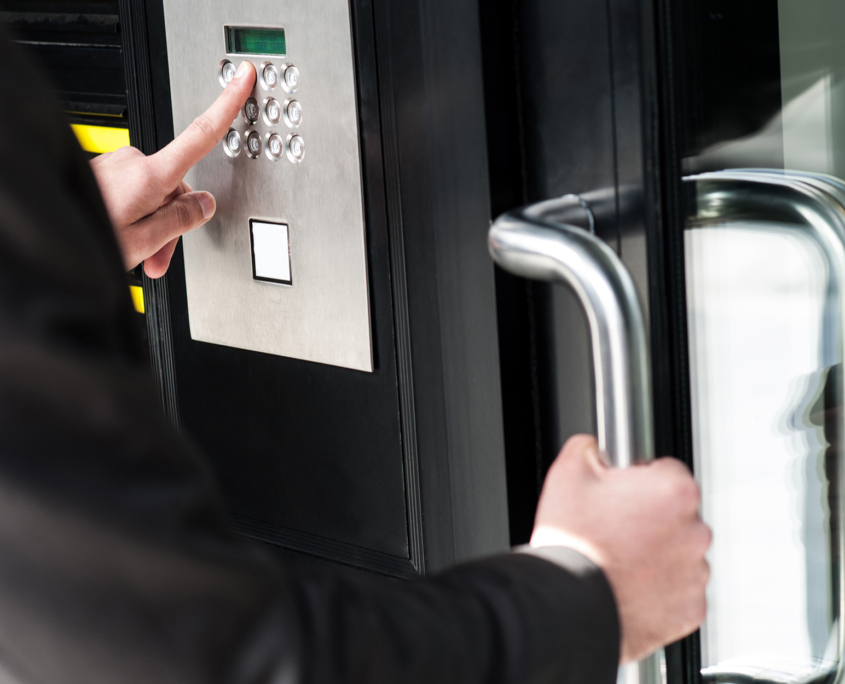
Credentials are matched to your users, not to a catalog: keycards, fobs, PIN codes, mobile credentials, or biometric readers for high-security zones. On the hardware side we source and install readers, commercial door hardware, and control panels tied back to a centralized management platform. Cloud architecture lets administrators manage permissions and pull reports from anywhere; on-premise remains an option for organizations with specific compliance or infrastructure requirements.

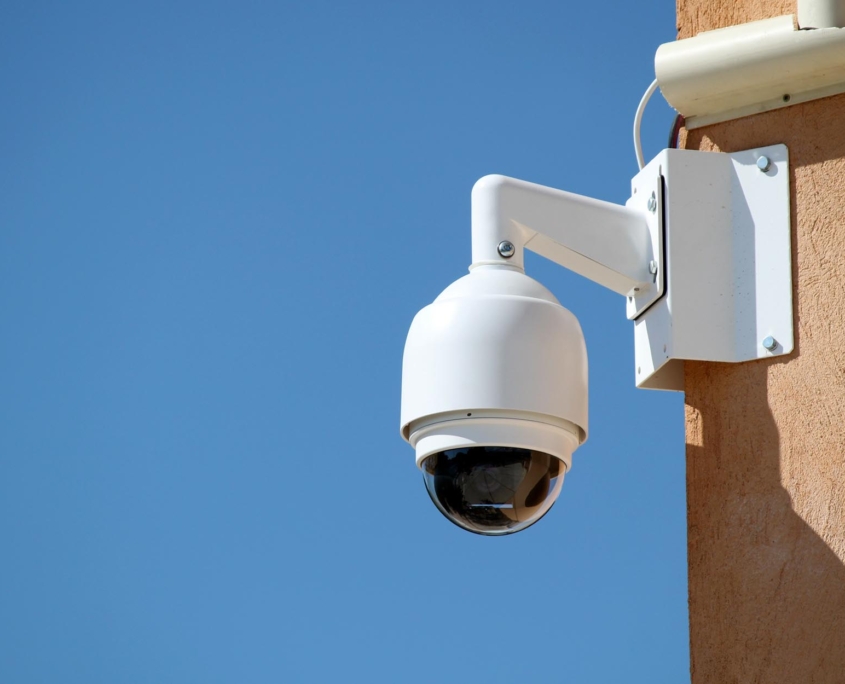
Access control is one layer of a physical security program, not the whole of it. ASIS International’s Facilities Physical Security Measures Guideline treats electronic access control as one component of a layered approach, and that is how we design it, alongside commercial surveillance, intrusion detection, and visitor management so a flagged credential surfaces across every connected system in real time.

Ready to Upgrade Your Facility’s Security?

Bring us the building, the headcount, and the doors you need controlled. We will tell you what the system should look like before you spend anything.

How a Paramount Access Control Installation Works

Installations follow the access control technology standards published by the Security Industry Association, so the system you get is built to a published benchmark rather than an installer’s preference.

Site walk. We walk the building, count and photograph every opening, and document the existing hardware, panels, and network drops.

System design. We map doors to access levels and user roles, then specify the platform, readers, and credentials that fit. You see the door schedule before anything is ordered.

Installation. Our licensed electricians run the low-voltage and power work in-house. We hold a master electrician license, so the wiring and the security work are handled by one contractor on one schedule.

Programming and training. We build your access levels, load your users, and train your administrators on adding, revoking, and reporting before we leave.

Service and support. Ongoing support is backed by our ironclad warranty and around-the-clock service response.

Access Control That Scales Across Every Building You Manage

Most St. Louis security contractors are set up to wire one building. Paramount is set up to hold a service contract across all of them.

Multi-location and multi-building accounts are a core part of our work, which means one credential database, one set of access levels, one point of contact for adds and revokes, and one contractor accountable when a reader fails at the far campus at 6 a.m. For a school district, a property management group, or a business running offices in three municipalities, that consolidation is usually worth more than any single feature on the system itself.

Building-access-control-systems-for-fingerprints-1024x640
Close-up-view-of-a-small-dome-cctv-camera

Why St. Louis Facilities Choose Paramount

  • Certified on the platforms enterprise buyers specify. Lenel, Genetec, and Allegion are installed and serviced in-house, not subcontracted out.

  • Woman-Owned Business Enterprise (WBE) certified. For government agencies, school districts, and institutional buyers carrying supplier diversity requirements, our WBE certification counts toward those goals on the contract you are already awarding.

  • Master electrician license. Low-voltage security and the electrical work behind it come from one licensed contractor, which removes the coordination gap where most access control projects lose time.

  • Local to St. Louis since 2013. Our team is based at 11139 S Towne Square and services accounts throughout Missouri and Illinois.

Frequently Asked Questions About Access Control Systems

Cost is driven by door count, credential type, and whether existing wiring and hardware can be reused. A four-door office running keycards sits at a very different number than a campus deploying biometric readers at high-security openings. Paramount provides a free estimate after a site walk, with the door schedule and hardware list itemized so you can see what each opening costs.

Door hardware is the physical layer: locks, closers, exit devices, and strikes. Access control is the electronic layer that decides whether a credential opens that hardware and logs the event. They are specified together and fail together, which is why we install both. Our breakdown of the difference between door hardware and access control covers where the two overlap.

Yes, and they vary by building type. Life safety and egress codes govern how controlled doors behave in an emergency, and healthcare, government, and data center facilities layer additional requirements on top. We design to those constraints from the site walk forward. See our overview of access control compliance requirements for the specifics that apply most often.

In most cases, yes. Because we are certified on Lenel, Genetec, and Allegion, we can assume service on an existing installation, audit the current configuration, and clean up access levels without replacing hardware that still has life in it.

Yes. A single platform can govern every building in your portfolio with one credential database and one set of access levels. This is how we run school districts, property management portfolios, and multi-site commercial accounts.

We install both cloud-managed and on-premise systems. Cloud gives administrators remote permission management, remote unlock, and reporting from any device. On-premise remains the right call for organizations with data residency, network isolation, or specific compliance requirements.

A small office is typically completed in days. Multi-building and campus deployments run longer and are usually phased so no entrance is out of service during business hours. You get a schedule with the proposal, not after the contract is signed.